
Heat Pump Installer Jobs in Germany 2026: The Trade Shortage Nobody's Writing About
Published July 2026 • Updated July 2026 • by Emma Fischer ・ 8 min read read
Germany's heating law and the EU's energy transition targets have pushed heat pump installation demand sharply upward, and the domestic trade workforce has not kept pace. For foreign job seekers with HVAC or SHK experience, this creates a genuinely under-the-radar opportunity with visa and recognition advantages.
Editorial note
Salary ranges, company hiring activity, and job links were checked in July 2026. Job-posting URLs change frequently, so verify the specific listing is still live before publishing and prefer the company's careers portal over a single job ID where possible.
- This shortage is driven by a specific recent policy push, not a generic labor gap.
- EU F-Gas certification is mandatory and separate from trade recognition.
- Recognition runs through the Handwerkskammer, not the ZAB or IHK FOSA.
- Salaries run roughly €32,000–€75,000+ depending on level and experience.
RELATED POSTS



Why this shortage is different from the usual Germany-needs-workers headlines
Germany's heating law (Gebäudeenergiegesetz) and the EU's REPowerEU energy plan have pushed heat pump installation targets sharply upward, and the domestic trade workforce simply has not kept pace.
Heat pump installer and HVAC/SHK roles are officially classified as an Engpassberuf — a bottleneck occupation — which means these applications often get priority processing rather than sitting in a general queue.
This is not just a general labor shortage story. Employers are actively building pipelines for foreign workers in heat pump installation, especially as installation quotas rise in both residential retrofit and new-build markets.
What the job actually involves
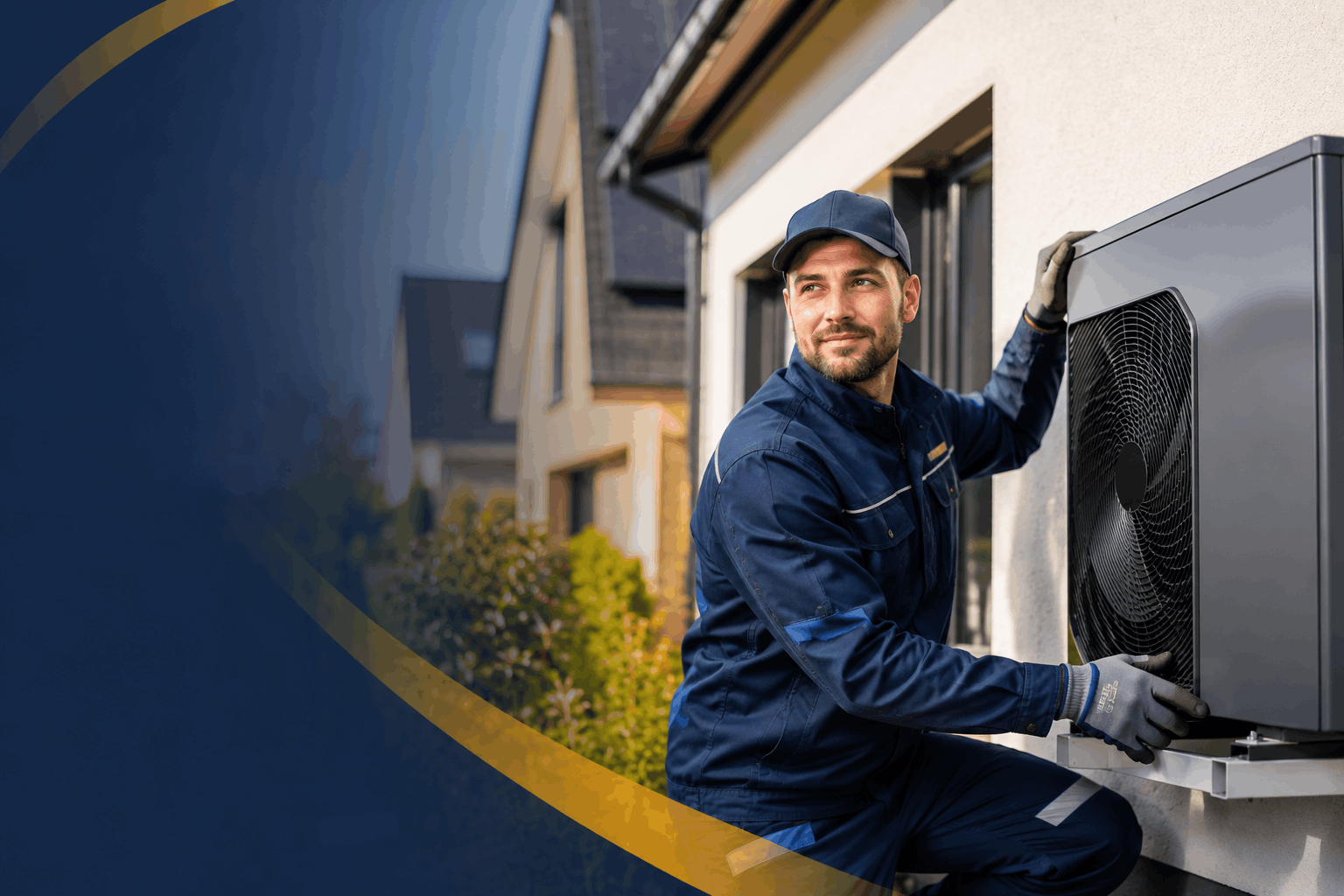
Heat pump installer work in Germany typically falls under the trade title Anlagenmechaniker SHK with a specialization in Wärmepumpen. Day-to-day work usually includes installing indoor and outdoor units, connecting heating distribution systems, commissioning controls, and servicing installed equipment.
Some roles focus purely on installation while others blend installation with system design or after-sales service, so it is worth clarifying the exact scope in any job posting.
The certification most guides leave out: EU F-Gas certification
The detail that trips up most foreign applicants is refrigerant handling. Legally handling refrigerant inside a heat pump's cooling circuit requires EU F-Gas certification.
Without it, you cannot legally perform refrigerant-related work in Germany or elsewhere in the EU, regardless of how much hands-on experience you bring from your home country.
Employers sponsoring visas for this role generally expect either an existing equivalent certification or a clear plan to obtain the EU version shortly after arrival.
Qualification recognition: the Handwerkskammer route
Because heat pump installation sits under a skilled trade rather than an academic profession, recognition runs through the Handwerkskammer rather than the ZAB or IHK FOSA.
The Handwerkskammer compares the content and duration of your foreign trade training against the German Anlagenmechaniker SHK reference qualification and issues a decision on full, partial, or no equivalence.
Partial recognition is common for this trade specifically, since heat pump technology and refrigerant handling requirements vary significantly between countries.
Salary ranges
Heat pump specialists tend to earn a premium over general HVAC technicians, reflecting both the certification requirement and the current demand spike.
| Level | Approximate gross annual salary |
|---|---|
| Entry-level / recently certified | €32,000 – €40,000 |
| Mid-level installer with 2–4 years' experience | €40,000 – €50,000 |
| Senior technician / team lead | €50,000 – €62,000+ |
| Master craftsman / system designer | €60,000 – €75,000+ |
Where demand is concentrated
Heat pump installation demand clusters most heavily around Berlin, Hamburg, Munich, and Stuttgart, tracking both new-build construction and retrofit activity in older housing stock.
Companies with large installation footprints often hire across a wide spread of regional and remote-based roles rather than concentrating purely in major cities, since installation work is inherently local to the customer's property.
Companies currently hiring
A few names are worth applying to directly, since they are actively building out installation teams rather than posting occasional one-off vacancies.
- 1KOMMA5° — Hamburg-headquartered cleantech company and one of the most active posters of heat pump installer roles in Germany.
- Enpal — Berlin-based residential heat pump and solar installer with a dedicated installation team page.
- Tesla Gigafactory Berlin-Brandenburg — regularly hires HVAC and heating-climate-ventilation technicians for facility systems work.
Common mistakes applicants make
Avoid these common errors when applying for heat pump installer roles:
- Assuming general HVAC experience is enough without checking F-Gas certification requirements.
- Applying through the ZAB or IHK FOSA by mistake — this trade goes through the Handwerkskammer.
- Underestimating German language requirements; hands-on trade work with homeowners usually needs at least conversational German.
- Not asking who handles certification costs, since some installers cover F-Gas and recognition-related costs as part of onboarding.
Frequently asked questions
Do I need German to work as a heat pump installer in Germany?+
What certification do I need beyond my trade qualification?+
Which body handles qualification recognition for this trade?+
How much do heat pump installers earn in Germany?+
Is this role on Germany's shortage occupation list?+

Emma Fischer
Senior Career Writer
Emma Fischer is a senior career writer focused on helping international professionals navigate Germany and Europe job markets with practical, research-backed guidance.