
IT Jobs in Germany 2026: Which Cities Actually Hire Foreign Developers
Published July 2026 • Updated July 2026 • by Emma Fischer ・ 8 min read
Germany doesn't hire foreign developers evenly across the country. A handful of cities absorb most of the international tech hiring, and knowing which ones — and why — saves months of applying into markets that were never going to respond.
Editorial note
Salary and threshold figures below reflect Germany's 2026 EU Blue Card rules and city-level pay data published mid-2026. Confirm current figures with the employer and official sources before signing a contract.
- Berlin, Munich, Frankfurt, and Hamburg each attract a different kind of international tech employer
- IT is one of the easier entry points into Germany because of the lower Blue Card threshold and English-friendly hiring
- The best city depends on your target employer type, work style, and cost-of-living tolerance

RELATED POSTS



Why IT is genuinely one of the easier entry points
Unlike most skilled professions, Germany treats IT as a recognized shortage occupation. That single classification changes the entire visa math: instead of needing to clear the standard EU Blue Card salary bar, IT specialists qualify at a meaningfully lower threshold, and experienced professionals can apply without a university degree at all, provided they can show several years of relevant hands-on experience.
Combined with the fact that most tech teams in Germany's larger hubs already operate in English day to day, this makes software roles one of the more realistic international career paths into the country — degree or no degree.
Where the hiring actually happens
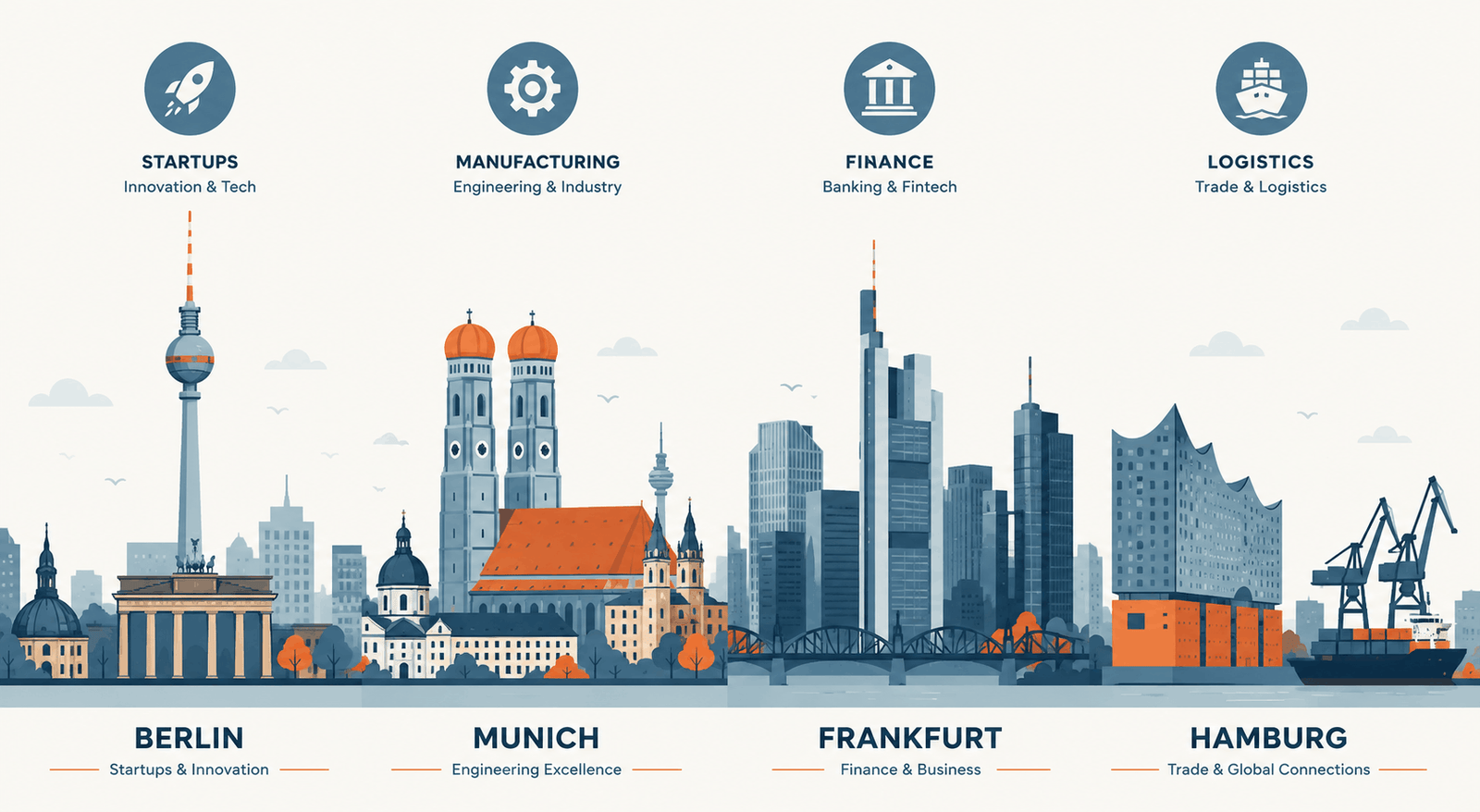
Berlin carries the country's largest concentration of startups, scale-ups, and regional offices for US tech companies. If you want exposure to product-led startups or global tech firms with EU offices, Berlin is the default starting point.
Munich leans industrial and enterprise. Automotive, engineering, and large established corporations dominate hiring here, alongside a smaller but well-paid cluster of global tech firms that chose Munich as their DACH engineering base.
Frankfurt is the financial-sector hub — banks, fintech, and trading firms hire developers here at a premium, particularly for backend, data, and security-focused roles.
Hamburg has a strong media, logistics, and e-commerce presence, with steady but less headline-grabbing demand than Berlin or Munich.
What the roles actually pay
Pay varies more by company type than by city alone, but city sets the baseline. Berlin and Munich sit above the national average, and larger international employers often pay well above what traditional German enterprises pay at the same seniority.
How the visa side actually works
Germany's IT shortage-occupation classification means the EU Blue Card salary threshold for tech roles sits noticeably below the standard bar — and specialists with several years of relevant professional experience can qualify without a completed university degree.
Any employer offering a genuine IT role in Germany should already be familiar with this pathway; if a company seems unsure how to sponsor a Blue Card for a developer, that's worth treating as a red flag about their hiring maturity.
What employers actually screen for
Formal credentials matter less here than in most regulated professions. A working GitHub portfolio, a clear account of what you actually built and shipped, and comfort working in English are usually worth more to a hiring manager than the university a candidate attended.
Take-home tests or live coding rounds are standard at mid-size and large employers; smaller startups often skip formal interviews in favor of a paid trial project.
Where to actually look
- Make it in Germany — the federal government's official portal for foreign professionals, including IT-specific admission and recognition guidance.
- LinkedIn and Xing — widely used by German employers, especially for internationally oriented companies.
- Company career pages directly — often surface international roles before they appear on aggregator boards.
- levels.fyi and Glassdoor — useful for benchmarking salary expectations before you negotiate.
Getting started
Confirm whether your experience level and background clear the IT shortage-occupation Blue Card threshold, build a portfolio that shows real, shipped work, and target Berlin or Munich first if you want the broadest range of English-speaking, visa-sponsoring employers.
Salary range
| Role | Estimated pay |
|---|---|
| Junior / entry-level | €45,000 – €55,000 |
| Mid-level | €60,000 – €75,000 |
| Senior | €80,000 – €100,000+ |
| Staff / principal | €100,000 – €140,000+ |
Application steps
- 1Confirm whether your experience level and background clear the IT shortage-occupation Blue Card threshold.
- 2Build or clean up a portfolio that shows real, finished work rather than course exercises.
- 3Target Berlin or Munich first if you're optimizing for the widest set of English-speaking, visa-sponsoring employers.
- 4Apply directly through company career pages for firms with existing international hiring pipelines, not just through job boards.
- 5Benchmark any offer against current city-level compensation data before signing.
Frequently asked questions
Which German city is best for foreign developers?+
Do international developers need German to get hired?+

Emma Fischer
Senior Career Writer
Emma Fischer is a senior career writer focused on helping international professionals navigate Germany and Europe job markets with practical, research-backed guidance.