
Warehouse Jobs in Germany 2026: Pay, Requirements, and How to Apply
Published July 2026 • Updated July 2026 • by Emma Fischer ・ 5 min read
Warehouse work is one of the most consistently open doors into the German job market for international candidates, and it does not get nearly the coverage that flashier tech and engineering roles do.
Editorial note
Pay figures reflect general market conditions and Germany's statutory minimum wage as of 2026. Actual compensation varies by employer, region, and role.
- Entry-level warehouse pay usually starts near the minimum wage
- Most entry-level roles do not require strong German
- Shift premiums and certification can significantly increase earnings
- A valid work permit is still required for non-EU/EEA applicants
RELATED POSTS


What the Work Actually Involves
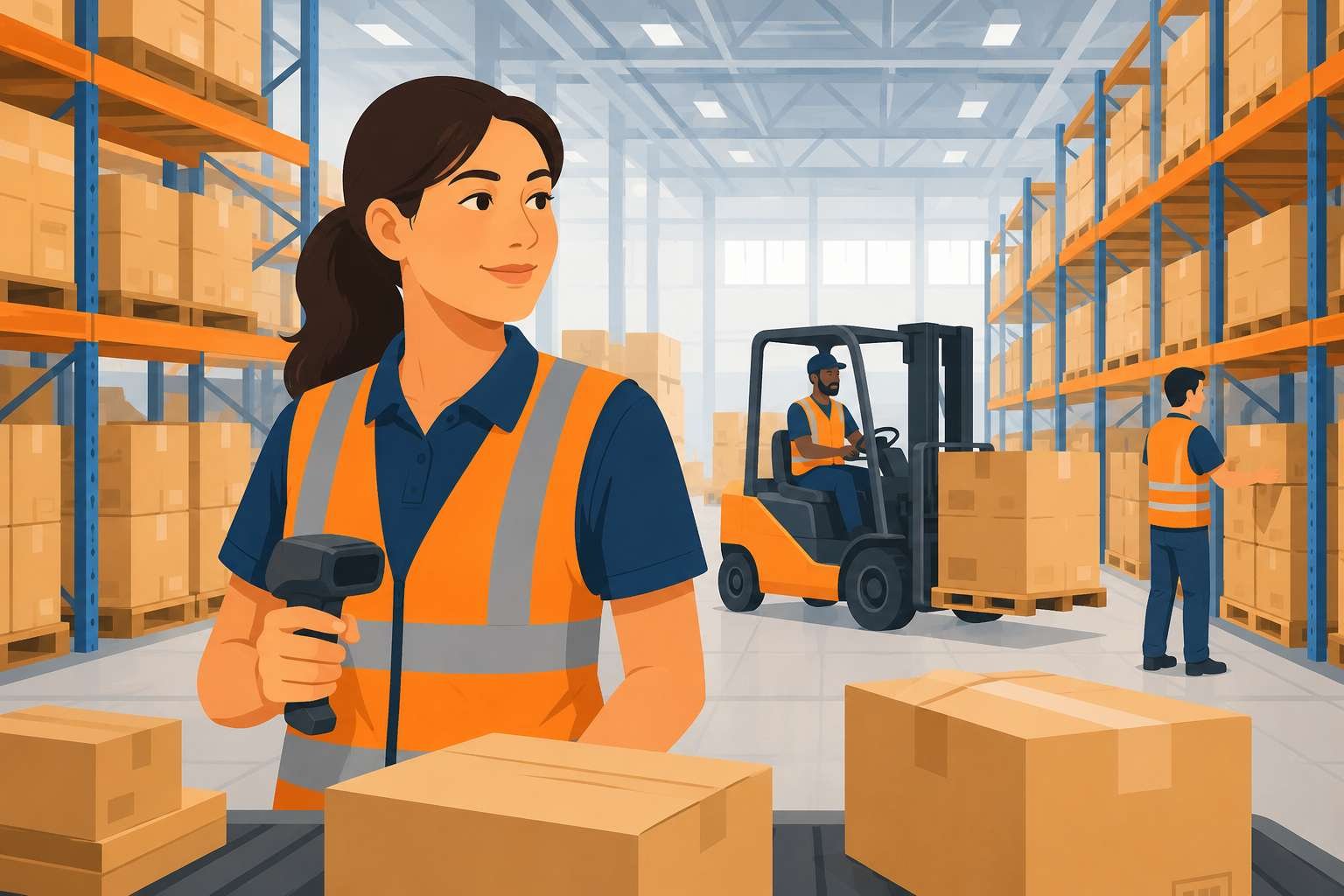
Warehouse and fulfillment roles cover a range of day-to-day tasks: picking and packing orders, operating scanners, sorting inbound deliveries, loading and unloading trucks, and increasingly working alongside automated sorting systems and robotics in larger facilities. Shifts are typically organized in rotating patterns, including early, late, and night shifts, with premium pay for overnight and weekend work.
Pay Expectations
Entry-level warehouse pay in Germany generally starts at or slightly above the national minimum wage, which stands at €13.90 per hour as of January 1, 2026. Large logistics employers often pay above minimum to stay competitive, and shift differentials can increase effective hourly pay significantly. Experienced operators, forklift drivers, team leads, and warehouse management assistants often earn in the €16–€22 per hour range depending on region and certification.
Do You Need to Speak German?
For most entry-level picking, packing, and sorting roles, no. Training is typically delivered through scanners, visual instructions, and short verbal commands that are easy to pick up regardless of your starting language level. That said, basic safety vocabulary and simple instructions in German make the first weeks noticeably smoother, and any German at all improves your chances of moving into a team lead or supervisory role later on.
What Employers Actually Look For
The most important traits are physical stamina, reliability, and shift flexibility. Employers also value basic safety awareness and the willingness to follow procedures closely. A forklift certification can be a major advantage if you are aiming for higher-paying operator roles.
- Physical stamina and tolerance for repetitive lifting
- Reliability and willingness to work nights or weekends
- Basic safety awareness and procedure-following
- Forklift certification for higher-paying operator jobs
The Application Process
Most large logistics employers recruit through online applications, and the process is often faster than office-track roles. A short online form, a brief phone or video screening, and sometimes a same-week start date for peak-season roles are common. Seasonal hiring spikes around major shopping periods create the highest volume of open roles, so timing your application around those windows can significantly improve your odds.
Visa Considerations
If you are not an EU/EEA citizen, you will need a valid work permit to take on warehouse work. This is one of the categories where the Chancenkarte's part-time work allowance is genuinely useful, because many candidates use warehouse shifts as their financial proof and first income source while searching for a role that better matches their long-term qualifications.
Frequently Asked Questions
The short answer is that most entry-level roles do not require fluency, but basic German helps and a valid work permit is still required for non-EU/EEA applicants.
- Do warehouse jobs in Germany require German? Most entry-level roles do not require fluency, though basic German helps with day-to-day communication.
- What does warehouse work pay in Germany in 2026? Entry-level roles typically start near the national minimum wage of €13.90/hour, with shift premiums and higher pay for certified operators and team leads.
- Can I get a warehouse job in Germany without a work visa? No — non-EU/EEA nationals need a valid residence and work permit.
- Is warehouse work seasonal in Germany? Hiring often spikes around major shopping seasons, which is a strong time to apply if you are flexible on start dates.
Salary range
| Role | Estimated pay |
|---|---|
| Warehouse worker | About €13.90/hour entry-level, higher with shift premiums and certification |
Application steps
- 1Apply through online portals for large logistics employers and fulfillment centers.
- 2Be ready for a quick phone or video screening and a fast-moving process.
- 3Highlight flexibility for shifts, reliability, and any relevant lifting or forklift experience.
- 4Prepare your work permit documents if you are not an EU/EEA citizen.

Emma Fischer
Senior Career Writer
Emma Fischer is a senior career writer focused on helping international professionals navigate Germany and Europe job markets with practical, research-backed guidance.